

Welcome to Field Notes, a roundup of readings to help you find your way through our polluted information environment, along with some “offline” commentary—what’s going on in my garden, my kitchen, and my life off screen. 🧭
Online Notes
A few pieces of news and analysis from recent weeks
LinkedIn Adds a “Seems Like AI Slop” Button
Last week, I wrote about Substack’s decision to partner with Pangram, an AI-powered AI detector (yes, you read that right), in order to give users more visibility into how content on this platform is being created. In Substack’s rollout materials on the partnership, Co-Founder and CEO Chris Best took several opportunities to dunk on LinkedIn. “We don’t want to wait until your Substack app turns into LinkedIn before we start to learn and make progress,” he all but chortled.
LinkedIn answered that potshot this week with an announcement from its Chief Product Officer, Hari Srinivasan that the platform had rolled out a “Seems Like AI Slop” button. In an opaque reference to Substack, he wrote: “We want members to get feedback from real humans on what sounds authentic - not just have an AI detector review it and get it wrong.”

While I think this is closer to the right solution than publicly assigning an AI-generated scarlet letter to any post that Pangram thinks deserves it, LinkedIn’s effort also leaves something to be desired. I would have liked to have seen a little more information from the platform on what happens next. At least from Srinivasan’s post, it seems like right now this button is just generating signals for the platform to interpret and decide what content moderation actions to take, and that, like Substack, LinkedIn is making it up as it goes along.
Mozilla Audited Invasive Cycle Tracking Apps—Here are Two Alternatives
The Mozilla Foundation published a useful audit of period tracking apps. As they write:
Period tracking apps aren’t just about when your period happens. Apps in this space ask you to log extremely intimate details so it can predict your cycle or help you get pregnant. From when you bleed, but also when you’ve had that late-night chocolate craving, and even when you have a miscarriage. In the Post-Dobbs landscape, we believe safeguarding this data and keeping it private is more important than ever.
If you or a woman in your life use a cycle tracking app, it’s worth switching to an app that takes privacy seriously. Here’s how Mozilla rates a few popular apps:
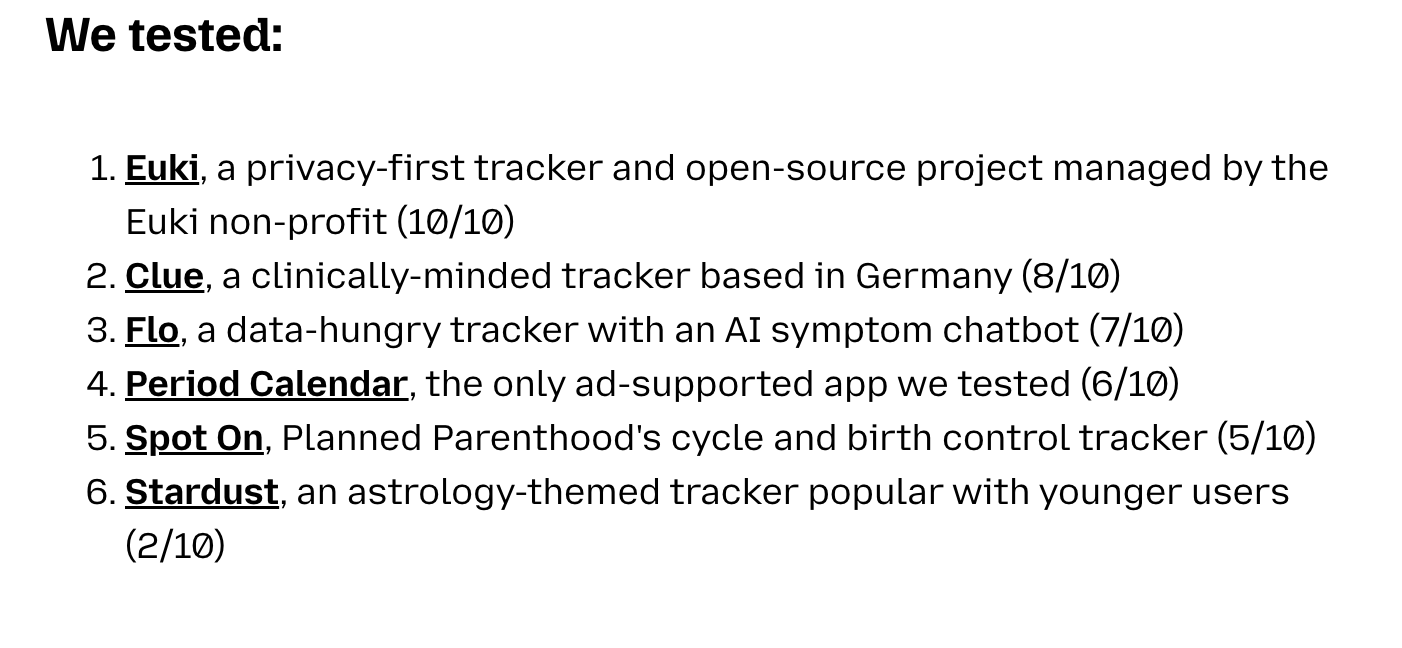
A privacy-minded friend also recommended Drip to me; I’ve used it for years and can confirm it checks all the boxes for privacy and is incredibly user-friendly.
The Horrifying World of Spy Cam Voyeurism
A couple of years ago, a friend was visiting Washington and was a few nights into an Airbnb stay in Georgetown when he made a horrifying discovery: his host had installed cameras throughout the property. He covered them, understandably creeped out by the potential for his host to spy on him.
The host wasn’t happy; he kicked my friend out the next morning. Airbnb has since updated their policies to globally ban this sort of spying. But imagine if the footage of my friend showering, using the bathroom, or any other private activity had been uploaded to the internet. According to a new BBC documentary presented by Jess Davies, there’s a growing market both for this voyeurism and the tools necessary to create it.
I was lucky enough to meet Jess, an advocate for women’s rights and privacy and author of No One Wants to See your D*ck, in 2024 when the Department of Health and Human Services held an event on ending image-based sexual abuse. I was impressed by her conviction and have followed her ever since. Her new documentary explores the amateur forums that equips men to spy on women in hotels, dressing rooms, restrooms, and beyond; Jess even confronts one of the site owners, who whines that “men are unhappy” about laws like the UK Online Safety Act, which are trying to root out behavior like this. It’s well worth 30 minutes of your life.
In case you missed my latest…
This week I wrote about why Sarah Rogers, Trump’s pick for the CEO of the US Agency for Global Media, which oversees Voice of America and Radio Free Europe, among other foreign broadcasting properties, is just a MAGA monster in free speech clothing:
The MAGA Loyalist Poised to Control US Foreign Broadcasting

PICTURE, IF YOU WILL, a person who has cheered the both barring of researchers from the United States based on their speech and the dismantling of an office that fought foreign influence.

Offline Notes
The real-life pastimes, products, and programs getting me through the infopocalypse.
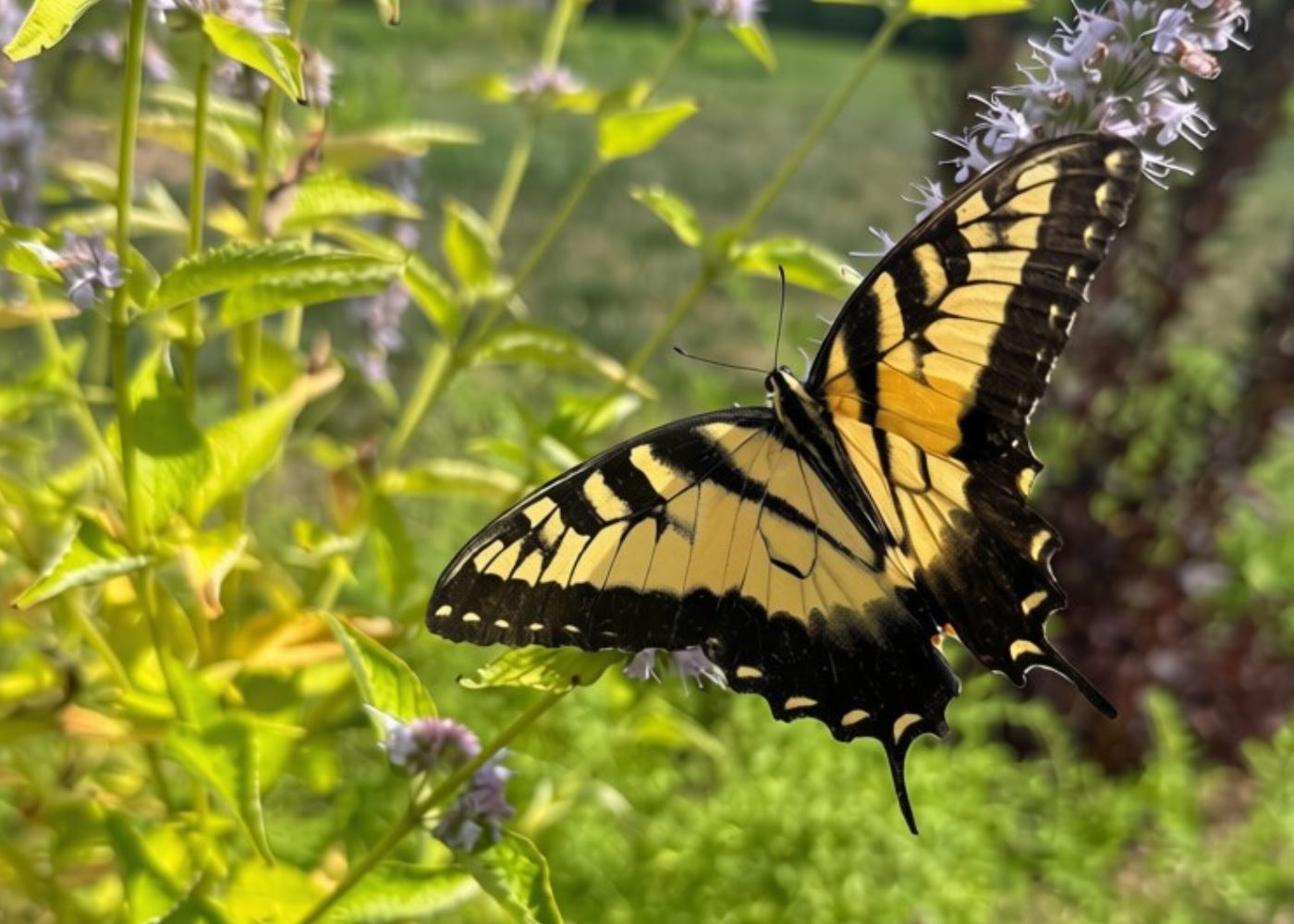
As I’ve written before, I’ve been spending a lot of time in the garden this summer. Earlier this year, as I was researching how to deal with the hard clay soil that is typical for my region, I heard a great conversation on NPR’s 1A about native plants and their role in supporting threatened species. Natives can also thrive in poor soil conditions without the construction of raised beds or making amendments to the soil. Natives, I decided, were the way to go.
I spent five years working in a plant nursery as a teenager, but I didn’t know the first thing about natives. Luckily, my very first boss in Washington, Lolly Jewett, who had a long career in democracy support, is now a native plant landscape specialist. She created a gorgeous plan for us and we’ve been enjoying caring for our new plants throughout the summer.
Lately, the biggest burden has been weeding. We had a few rainy weeks in a row, followed by the oppressive smoke cloud from the Canadian wildfire. I was heads down on some big projects, and before I knew it, I had some massive crabgrass specimens snaking their tentacles through my beds. It took a few hours of hard work over two weeks to claw them back. I finished last weekend before we went out of town, and by the time I was out in the garden to water this week, the first bed I finished had more weeds peeking through again.
While I’ve been weeding and watering, I’ve enjoyed listening to a book I’ve come to think of as writer church: Susan Orlean’s Joyride, a recounting of The New Yorker staff writer and The Orchid Thief author’s life and career, and, more importantly (for me anyway!) a peek inside her process. I’m glad I am not the only writer walking into interviews with very little idea what I’m going to be asking my subjects about! 😅

Enjoy the rest of your weekend! If you enjoyed this post, send it to a friend or hit the heart button. 🩵
This email contains affiliate links to Amazon.com, whereby I earn a small commission on any purchases you make.