

Before we get to the main event: I’m as pissed off about Trump’s corrupt slush fund as you are, so I am embarking on a little experiment:
The Future of Truth is Local

A BRITISH FRIEND visited the U.S. recently; when he told a cab driver he lived in London, the man offered his condolences on “what happened to the city.” He believed it was engulfed in crime. The cabbie, it seemed, had been one of millions of social media users to see online disinformation—intentionally false or misleading posts—targeting London and the United Kingdom over the past two years. The users behind these posts tap into people’s real grievances, but not with the intention of solving them; their goal is monetary or political gain.
Research commissioned by London mayor Sir Sadiq Khan shows that since 2024, narratives claiming London is “in decline” have increased at least 150 percent, while migration-related narratives have increased 300 percent. Far from being authentic discourse from the UK about its capital, many users peddling anti-London narratives are unlikely to have ever set foot in the city. The Mayor’s report notes that pro-Russia, pro-China, and pro-MAGA actors have promoted or amplified this divisive content. Last week, a BBC Panorama investigation interviewed the profit-motivated users as far away as Sri Lanka and Vietnam who have shared “anti-immigration AI-generated posts about the UK” to audiences in the millions.
I’ve studied disinformation for most of my career, and even been involved in U.S. government efforts to combat it at the federal level. But the increase in AI-powered falsehoods and our increasingly insular internet have led me to reassess the antidote to this illness. While national-level governments must regulate Big Tech, addressing the economic, societal, and democratic impacts of social media, it is local and city governments, experiencing the first-order effects of disinformation, that should lead the charge to build societal resilience to online manipulation.
The online disinformation playbook has been around for two decades. Moscow used it in Estonia to exacerbate tensions between ethnic Russians and Estonians in 2007; it deployed the same tactics across Central and Eastern Europe for the intervening decade before famously unleashing them in the US ahead of the 2016 election and in the UK during the Brexit referendum. The themes in those campaigns would be familiar to audiences today; in 2016, Russia’s Internet Research Agency purchased ads served to UK and US audiences that contained anti-Muslim commentary from a page called “Stop All Invaders.”
The West’s introduction to this challenge was through the lens of nation-state-level information competition, so its response was nationalised and securitised, focussed on exposing adversarial campaigns that had national security implications. Together with poor communications from governments, this top-down approach has left government campaigns to combat disinformation vulnerable to accusations of censorship, even if such claims have little to do with reality. Further, too little effort and funds have been expended in empowering people to navigate an increasingly complex information environment, a generational investment that would arm them with the skills to identify manipulative tactics no matter what the medium is or which party controls the government.
Throughout my research, I’ve seen that these sorts of programs—grounded in community and aware of local issues—are the most successful. Librarians teaching information literacy. Local not-for-profits showing grandparents how to FaceTime their grandkids and avoid falling for scams. Comedians putting on free shows in their hometowns that both educate about online influence and entertain. Events like these help people understand their information environment. When local officials get involved and neighbors can discuss the issues facing their communities face to face, they also build trust in institutions and strengthen the social fabric.
(If you like this, you’ll love HOW TO LOSE THE INFORMATION WAR! 👇 )
The rise of generative AI makes investing in local approaches to countering disinformation all the more urgent. Large language models and image generators have rendered it trivial for any huckster on the internet to develop bespoke messages and accompanying media tailored to vulnerable audiences. Meanwhile, our once-ubiquitous social media platforms are disintegrating and we’re self-selecting into increasingly insular communities. We need the ground truth that only face-to-face contact can provide.
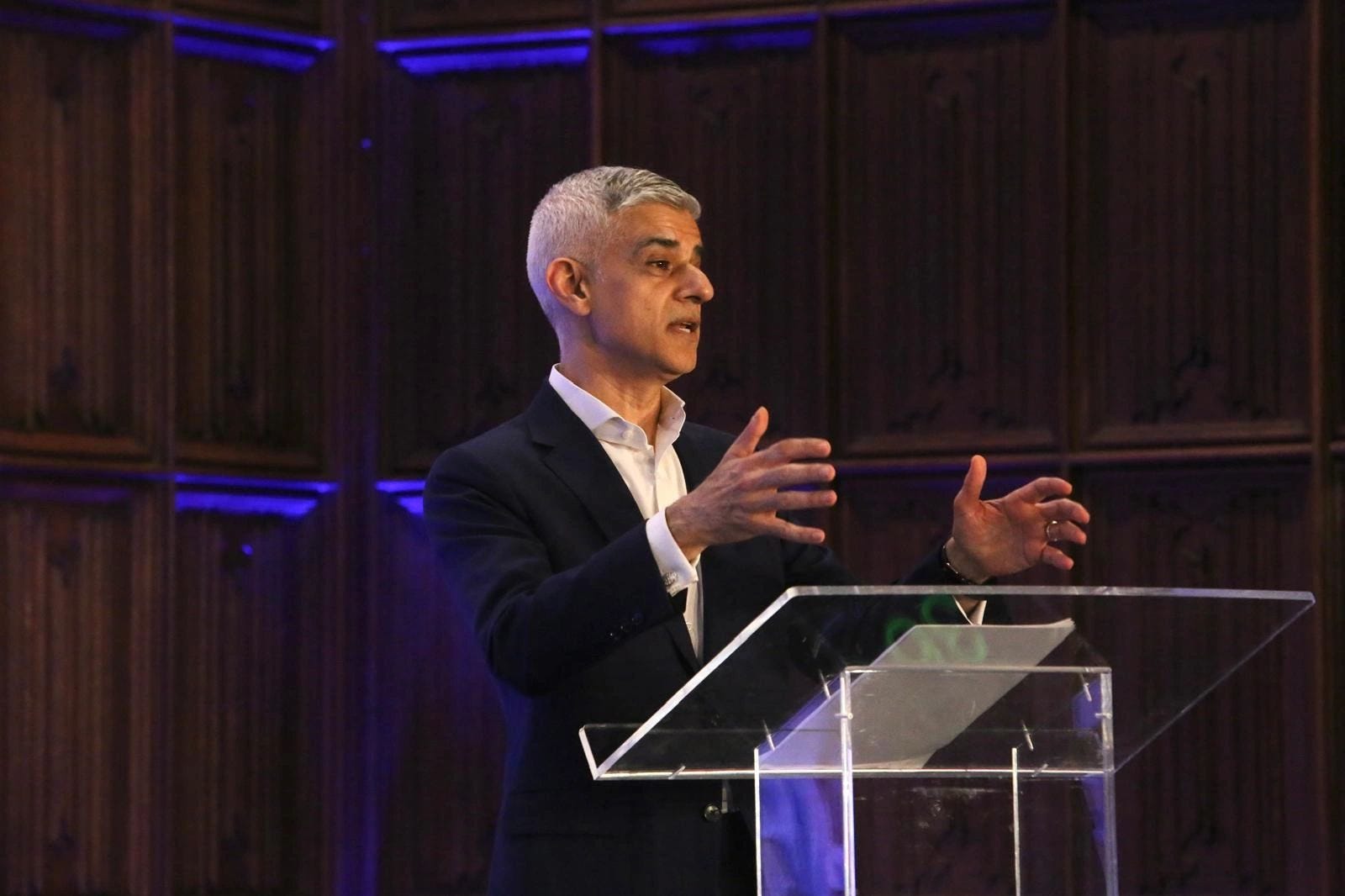
So at the Cambridge Disinformation Summit in April, when Sadiq Khan highlighted the challenges facing his city as a result of online lies, I was glad to hear a local leader talking about addressing the challenge. He called on tech companies to do their part to stop incentivizing the “division dividend,” and promised his team would be “expos[ing] the people pushing lies about London and debunk[ing] the dangerous lies they’re spreading.” London, he told the audience, would be the canary in the coal mine for other cities around the world targeted by viral falsehoods.
But I think Khan and his city should go further. If he takes the challenge seriously, London could also be the first city with a dedicated resilience-building program, too. The Mayor should evolve his one-off research on London disinformation into a full-time insight and analysis unit that can not only tell him what’s trending, but clue him in before the disinformation reaches a fever pitch as it has done over the past few years. To be most effective, such insight-building should be cross-government, methodically drawing observations from disparate parts of city—and even national—government.
Using that information, his team could not only continue to craft communications campaigns to challenge false and misleading narratives, but understand which audiences in the city are more vulnerable to disinformation. Then, his office could fund community groups to offer trainings for their neighbors on how to avoid being manipulated and scammed online. These groups enjoy more trust than politicians and can mold curriculum so it’s more resonant in the local context. Moreover, the content wouldn’t be political; the same skills that keep you from signing away your life savings to someone you met in a Facebook Group are those that will help you avoid being manipulated by foreign actors. These community events have the added impact of drawing people away from their screens, out of their homes, and face-to-face with their neighbors, with a reminder that there is still kindness and humanity in the world.
Khan, along with New York’s Zohran Mamdani, Minneapolis’s Jacob Frey, and other mayors and governors like them, who are vociferously challenging falsehoods from their bully pulpits are headed down the right path. But they can take it further.
The disinformation spread about these cities is asking residents to “reject the evidence of [their] eyes and ears,” to borrow a quote from Orwell. Winning that battle is more than a he-said-she-said, more than strategically-deployed memes.
It’s about getting people back into their communities—and empowering them to be the first line of defense against online manipulation. 🧭
Love this post, Nina. In fact, I'd love to talk to you about it. In a curious coincidence, my colleagues and I happen to be working with London, Ontario, a city that suffered a horrific hate crime five years ago. We've developed a learning intervention designed to help kids understand the forces that polarize and radicalize. It's also designed as an active inoculation against "mind traps", and our preliminary data suggests that we're hot on the trail of a powerful antidote to the politics of hate. Can we discuss?
Nina: about the issues you mentioned re misinformation about London, we have the same problems up here in Canada!
Back in early May, disinfowatch released a report about foreign (mostly Russian and American) interference in Canadian national unity (https://disinfowatch.org/foreign-interference-targeting-canada-and-alberta/).
There were also YouTube "slopaganda" videos that the CBC traced to Dutch content creators:
Alberta separatist leader unconcerned about influence of YouTube ‘slopaganda’ videos
https://www.cbc.ca/news/canada/calgary/slopaganda-youtube-alberta-separatism-9.7171993
People have to be very careful about the information they get online. Unfortunately, critical thinking seems to have been forgotten so people share info that their silo agrees with ... and disregard everything that goes against their personal beliefs!
Keep up the great work,
John