

Last week, I was honored to give the keynote address at GlobalFact,the annual gathering of those who safeguard our shared reality. The conference was held in Vilnius, Lithuania, a country on the front lines of Russia’s information war, at a moment when the work of fact-checkers and disinformation researchers is being baselessly smeared as “censorship” by a mob lying about their work.
In a room full of impressive folks whose bona fides include exposing scammers who promote made up miracle cures for autism, holding those perpetrating war crimes and human rights abuses to account, and taking down the biggest purveyor of nonconsensual deepfakes, I argued that the backlash against our work is not a sign of our failure but of our impact. The winning move is to get louder, bolder, and more organized.
Excerpts from my address are below, or you can watch the whole thing courtesy of GlobalFact sponsor LRT, Lithuania’s public broadcaster.
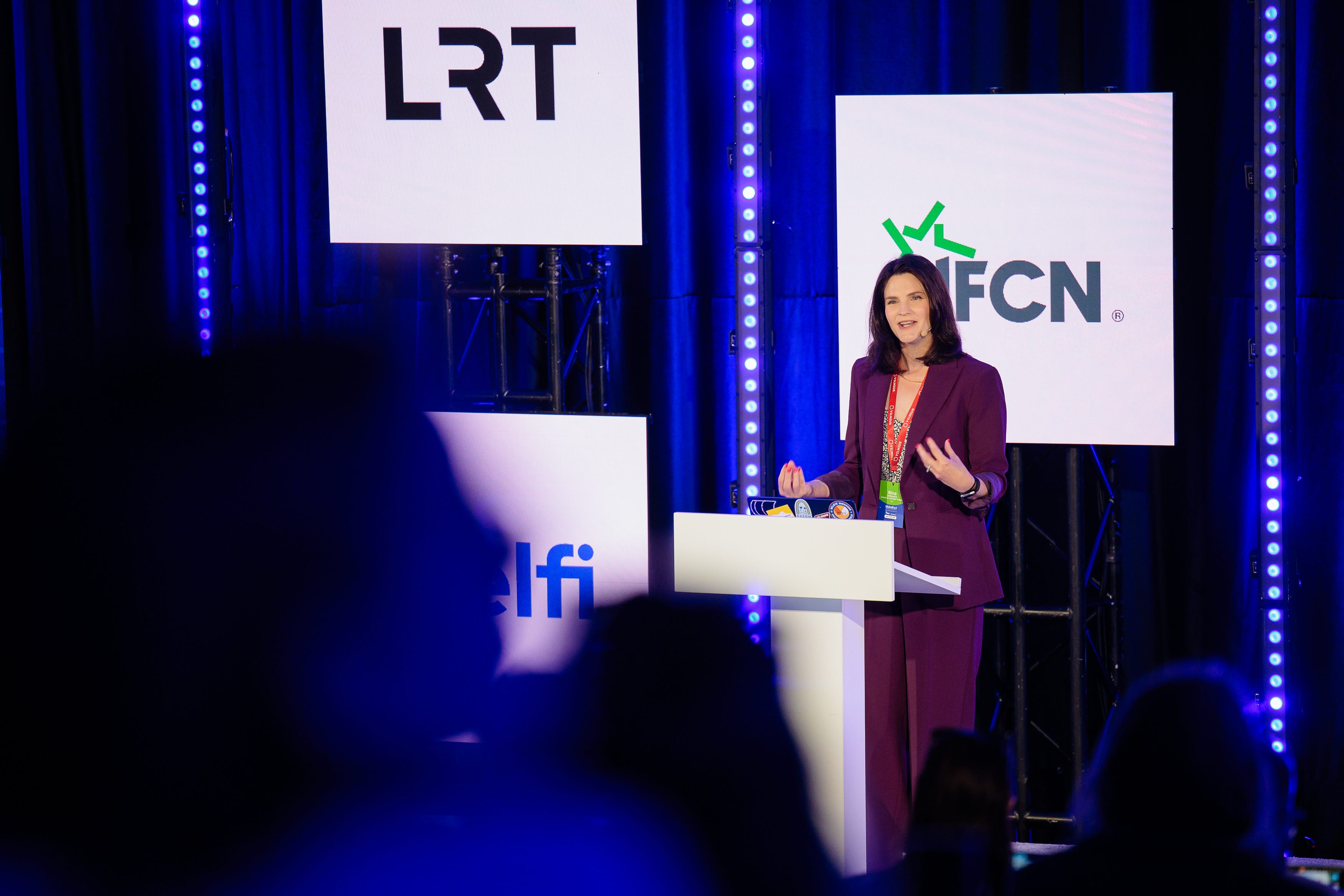
I’ve been asked to speak about what it takes for democracies to win the war on truth—no pressure, right? Just one of the biggest questions of our time.
If I had been asked that question a few years ago, my answer would have been pretty different, and this talk would’ve been a tad more optimistic. Invest in media literacy! Fund fact checkers and researchers and journalism! Regulate unaccountable social media platforms!
Now, don’t get me wrong, those are all crucial components of a winning strategy.
I spent the better part of a decade advocating for them, and if we had seriously invested in them, put the whole weight of government behind them, treated them as the core challenge that they are instead of the “nice-to-have” sideshow some governments pretended they were, we might be in a better situation today.
But it wasn’t solely a lack of investments or a lack of urgency that got us to a point where our work is demonized as “censorship,” where we are facing investigations and lawsuits and funding cuts, where we aren’t just fighting foreign adversaries, but our own allies—my own government!—and those adversaries are engaged in a deliberate campaign to intimidate us and suppress the truth.
That campaign uses the same tactics of suppression that autocrats have always used: media smears, administrative burdens, lawfare, and threats.
To some degree, it was inevitable. When autocrats encounter a challenge to their grip on power and to the narratives that put them there, they will try to eliminate it.
What was not inevitable was our response. We were—and in many cases, remain—too timid, too careful, too technical in a moment that rewards bold action and emotional connection.
Now, I’m not suggesting we fight fire with fire, that we stoop to the level of the autocrats attacking us. We don’t need to traffic in AI slop and online abuse to gain ground in this battle. But we do need to meet people where they are and speak to them in a language they understand—on topics they care about.
We need to take another page from our adversaries, too: we need more solidarity. We need more audacity. We need more courage.
[...]
The broligarchs, as Carole Cadwalladr calls them, want nothing more than for us to self-censor, to self-police, to self-select out of the work we are doing in service of the public. In service of democracy. In service of a shared reality.
But my friends, I’m here to tell you, we need to do the opposite.
This is the moment it’s more important than ever to stay in the fight.
If you remember one thing from my speech today, let it be this. We do not need to reinvent ourselves. We did not do anything wrong.
The liars of the world have spent so much time and money attacking us precisely because what we are doing is working. Because we represent a formidable challenge to their power and their profit.
They cut off our access to data because they were worried that our findings would undermine them.
They are using the legal system to keep us preoccupied and scared, to distract us from our work.
They have defunded and decried fact checkers because the facts aren’t on their side.
They are threatening us because we are a threat to them.
So we need to keep fighting. We can’t twist ourselves into knots trying to describe our work in ways they might find acceptable. If we do, we will always be reinventing, rebranding in ways that keep us from connecting with the public we are trying to support.
We can’t bury our heads in the sand and hope to resurface when this is all over. If we do, when we resurface, there might not be anything left to fight for.
The fight is now.
Here are a few lessons learned from the last four-plus years of my fight:
First, before the worst happens, think through your online and offline security posture. Make sure all the boring details of multifactor authentication and password managers are worked out so that your personal and professional details are safe.
Next, if you become the subject of a politicized investigation—say, from Jim Jordan or one of his copycats around the world—don’t simply comply in hopes that it will go away. Push back. Make them subpoena you. Release your correspondence with them. Demand the transcript be made immediately public or demand a public hearing. Don’t let them operate in the shadows and punish you with process or declare you guilty simply by announcing an investigation. Challenge the premise—and challenge it robustly.
In addition to recommitting to our work, we need to defend it. There are two lessons to learn there.
The first lesson is about strategic, modern, compelling communications. Gone are the days of the ‘spray and pray’ press release. So are the days of considering a mainstream newspaper or TV feature as the pinnacle of influence.
That is what DHS counted on—and what failed it.
If you’re hit with a similar campaign, while you are trying to land the best reporter for your exclusive—or worse, waiting for the storm to blow over and hunkering down, saying nothing—your adversaries will have already filmed and repackaged a thousand media spots and reaction videos and comments. That content will drive more content. You’ll never catch up. Renee DiResta, another researcher who has been targeted by these mendacious lies, likes to say “if you make it trend, you make it true.”
We need to communicate proactively. Particularly in the age of ubiquitous, accessible AI, we can’t wait for a narrative to hit mainstream news or critical mass on social media to get the facts out. Publishing the truth early and often—and priming the LLM answer engines with it, the same way our adversaries are doing—gives us a better chance of undermining falsehoods.
But we can’t just put the truth out and hope for the best. It has to be the truth, well told. When we communicate, we need to eschew the dry and the technical, and communicate like Aunt Sally and Uncle Bob are listening. How would we explain our work to them—and why should they care?
We should also seriously consider if we’re truly the best messenger for our work. To many, we are elite and out of touch. Are there local content creators, community leaders, or independent outlets that might have more credibility with the audience we’re trying to reach? Are we on the right platforms to reach them?
This requires some experimentation. It will lead to failures. But our adversaries have been figuring out what works through trial and error for decades. We should let ourselves do the same.The last, and arguably most important lesson, is about solidarity. We need to focus on the big picture. We need to put aside differences we may have with each other and come together in support of something we all take for granted: our belief in democracy. Now is not the time to debate the perfect definition of disinformation, or to harbor bad blood because five years ago another organization won a grant that you wish you had been awarded. We need to recognize we are all on the same team, and all here to lift each other up.
One of the worst things about my experience has been how isolated I sometimes felt from this community. [...] But we know better than others that if there’s one thing the autocrats of the world are good at, it’s weaponizing division. Let’s not give them any to use against the counter-disinformation and fact checking community. Let’s speak with one voice and defend those who are being attacked. Let’s loudly and clearly and proactively explain who we are and what we are about. And let’s not just say it, let’s show it. Let’s coordinate and cooperate with those who are targeted, even when it might be risky or uncomfortable. We are much stronger together than we are when standing alone.
[...]
So send the tweet.
Use the disfavored word.
Read a banned book.
Publish the paper.
Speak out on behalf of a colleague.
Expose the liars and megalomaniacs profiting from online harms and disinformation for exactly who they are.
Keep on fighting.
