

Last week, Darren Beattie—a white supremacist, far-right shitposter, and Trump State Department adviser—was permanently barred from entering Brazil. He had hoped to visit with former President Jair Bolsonaro, who is serving a 27 year jail sentence for plotting a coup after losing the 2022 election, but apparently lied on his visa application; the Brazilian Foreign Ministry accused Beattie of “intentionally misrepresenting a material fact or committing fraud.”
Readers of this newsletter will remember Beattie. As I wrote last May, “even by the nearly nonexistent standards of the second Trump Administration, Beattie is profoundly unfit and unqualified for public service,” having given a speech at a white supremacist conference, harassed women and minorities, and propagated absurd election conspiracy theories on his extremist media outlet. But in the Trump administration, those are the qualifications that get you multiple high-level appointments; in the past year, he has served as Acting Undersecretary for Public Diplomacy, Acting Assistant Secretary for Educational and Cultural Affairs, and the President of the U.S. Institute for Peace.

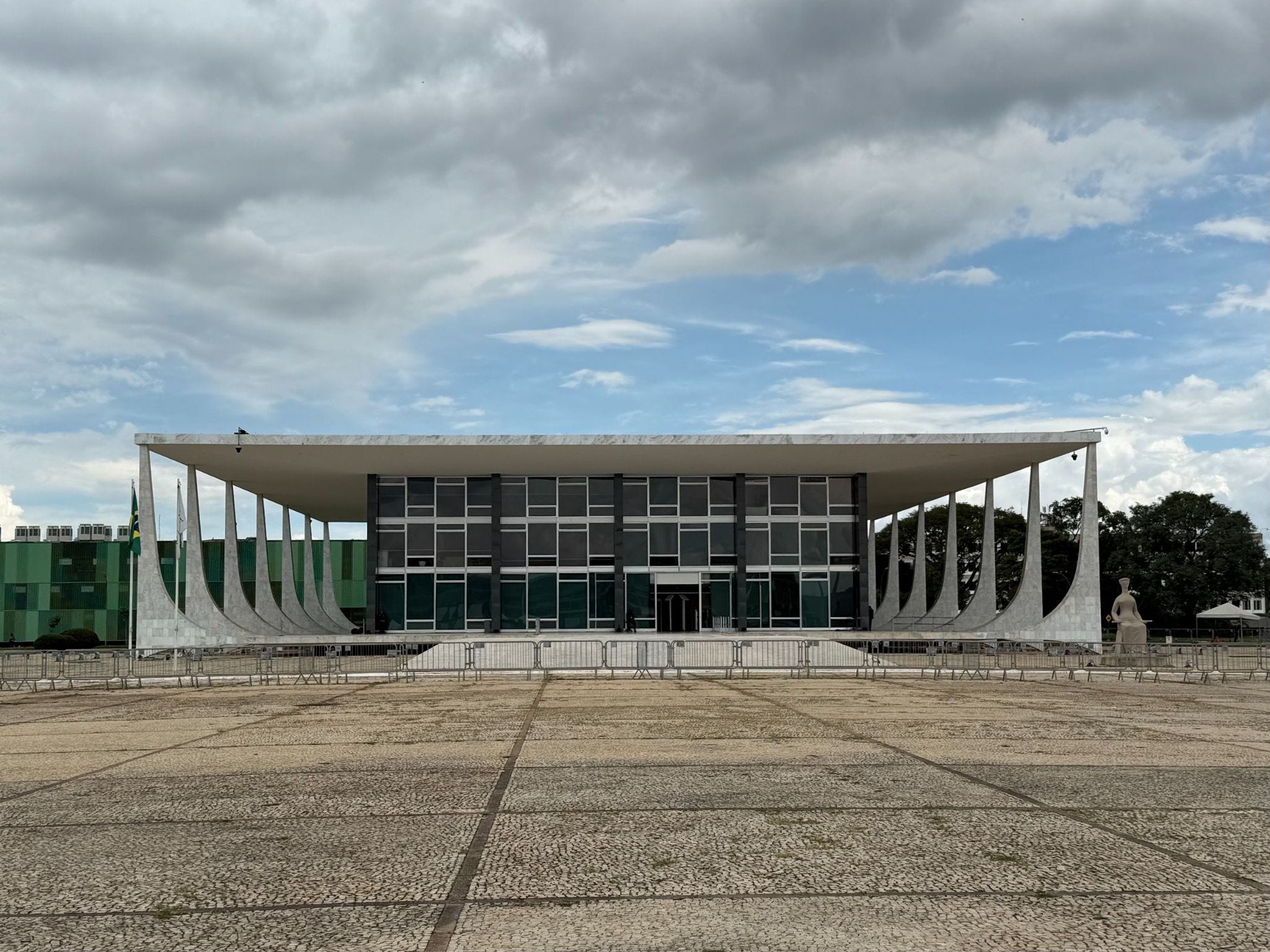
More recently, he attacked Brazilian Supreme Court Justice Alexandre de Moraes as “the key architect of the censorship and persecution complex directed against Bolsonaro.” Reuters reported that “Brazil’s Foreign Ministry summoned the top U.S. diplomat in Brasilia to explain the comments.” That tantrum seems to have secured him an appointment as Special Advisor for Brazil Policy at the State Department; his public first act in this role was to attempt to visit Bolsonaro, to which Brazil said: no fucking way.
As that diplomatic incident reached its dramatic conclusion, Brazilian President Lula da Silva said of Beattie: “That American guy who said he was coming here to visit Jair Bolsonaro was prohibited from visiting, and I forbade him from coming to Brazil until they release the visa for my health minister.” The Brazilian government also told leading newspaper Folha de São Paulo that they saw Beattie’s visit—which did not include meetings with any current Brazilian government officials—as election interference.
And here, dear reader, is where I get to brag: I’m in Brazil and Darren Beattie is not. Unlike Beattie, I did not lie on my visa application and have been in the country for the past week, interviewing Brazilian officials and civil society activists, trying to figure out why Brazil fights back against wannabe authoritarians like Beattie and Elon Musk, and how, against the odds, it wins.
This post isn’t meant to be a definitive answer, but the beginning of an exploration. I’m fascinated by the fact that, as one government official told me this week, Brazil has the same story as the United States—a populist president who tried to overthrow an election, a highly divided populace, tech companies that support anti-democratic forces—but, for the time being, anyway, Brazil’s story has a happy ending.
Brazil versus Musk
Before Beattie, Brazil took on a more formidable (though seemingly no less drugged out) part of the Trump universe: Elon Musk. This showdown is a case study in Brazilidade, that ‘Brazilianness’ I’m trying to pin down.
When Musk took over Twitter, he rapidly rolled back many of the investments the company had made in staff and policies that kept it in compliance with the laws of the countries where it did business. In Brazil, those laws empower the courts to order social media platforms to remove illegal content, including hate speech, racism, incitement to violence, child sexual abuse material, terrorism, and disinformation, especially when tied to election interference or coordinated harassment. When Supreme Court Justice de Moraes ordered Musk to remove content related to the January 8 insurrection in Brazil, Musk refused, bucking an earlier promise that “Twitter [w]ould follow the laws of the countries it operates in.” He neglected to pay the ensuing fines and closed the company’s Brazil office, putting it in direct contravention of Brazilian regulations that require foreign companies to have a legal representative in Brazil.
Institutions that Work
Justice de Moraes attempted to engage with Twitter—then recently rebranded X—multiple times to bring the company in line with Brazilian law. Ultimately, it seemed Musk wanted to force a ban. (One of my interviewees this week mused that Musk wanted X to be banned in Brazil so he could spin the case as a censorship prop to wave around during the height of the 2024 U.S. election campaign.) And so de Moraes banned the service in Brazil from August 30 to October 8, when Musk ultimately relented, appointing a local representative, banning accounts involved in the January 8 coup attempt, and paying fines totaling about R$28.6 million (roughly $5.2 million USD).
When speaking with Brazilians throughout this trip, I asked them if de Moraes went too far in his decision. My interviewees were far from Lula’s lapdogs; they’ve spent the past 20 years holding Brazilian executives—from Lula, to his successor Dilma Rousseff, and to, yes, Jair Bolsonaro—to account, protecting the litany of rights Brazilians are expressly afforded in their constitution. While the folks I spoke with may have small critiques about how decisions around banning X (and later conservative YouTube alternative Rumble) were carried out (many believe de Moraes and other judges working on cases related to social media should operate with more transparency, for instance) they all believe the decision was correct, and reflective of the spirit and intent of Brazil’s judiciary. It’s Brazilian institutions, most of my interviewees said, that have enabled Brazil to fight back so adeptly. Moreover, without holding Musk and X (and later, charlatans like Beattie) to account, rule of law in the country would be undermined.
It’s certainly strange for Americans to consider the implications of a truly independent judiciary at this moment in our history, as we’ve seen our country’s struggle for democracy play out in the courts. When judges make decisions that the Trump regime does not agree with, they’ve been threatened with impeachment and worse.

Brazil has seen this movie before; the country’s judiciary got its fierce independence as a direct backlash to the 1964–1985 military dictatorship. Military rulers routinely overrode Supreme Court rulings, undermined habeas corpus, and governed by decree, leaving little judicial backstop against power grabs. Fresh off that trauma, the 1988 Constitution was drafted as an explicit “never again” to authoritarianism, with clauses restoring judicial safeguards and ironclad separation of powers. Supreme Court judges in Brazil have the power of abstract constitutional review, in which they can rule on important issues without waiting for cases to be referred to them, which massively amplified its political muscle. More broadly, they enjoy lifetime tenure, salary shields, and full administrative-financial autonomy, shielding them against political revenge or budget squeezes from Congress or the executive. (The Senate can impeach justices, but the two-thirds majority impeachment requires is a steep climb for Brazil’s multi-party system.)
In short: Elon Musk and Darren Beattie’s “censorship” tantrums against Justice de Moraes are a distraction for a larger gripe. They could care less about the man, and they’re perturbed by his decisions and their implications for their income and political futures. What angers them most is a system they can’t control—one that actively defends the democracy it was set up to protect.
Looking Toward Elections... and Election Interference?
Beattie’s thwarted visit shows the MAGA elite is not done interfering with Brazilian democracy just yet. The country will hold general elections in October, and my interviewees noted that social media platforms are walking a fine line as the vote approaches. Following Musk’s example, and in response to the manufactured outrage against content moderation that has gone mainstream over the past few years, platforms are reticent to cooperate the way they have in the past. There’s also pressure from the Trump administration not to comply with foreign regulatory regimes that MAGA describes as “censorship.” That puts tech platforms in a tough spot. They want to please their right-wing overlords but don’t want to lose access to an important market for their services; Brazil represents a top five market for the many of the biggest social media platforms.
Beattie’s visa denial is a reminder to MAGA envoys—whether in Silicon Valley or Washington, DC—that Brazil isn’t a backdrop for American psychodramas. The country’s institutions and the people that lead them aren’t perfect. But when a billionaire or a shitposter-turned-diplomat (dare I say...a shitplomat?) tries to turn the country into a content farm or a coup playground, the system says no, and means it.
What’s our excuse? 🧭

"shitplomat" is good.